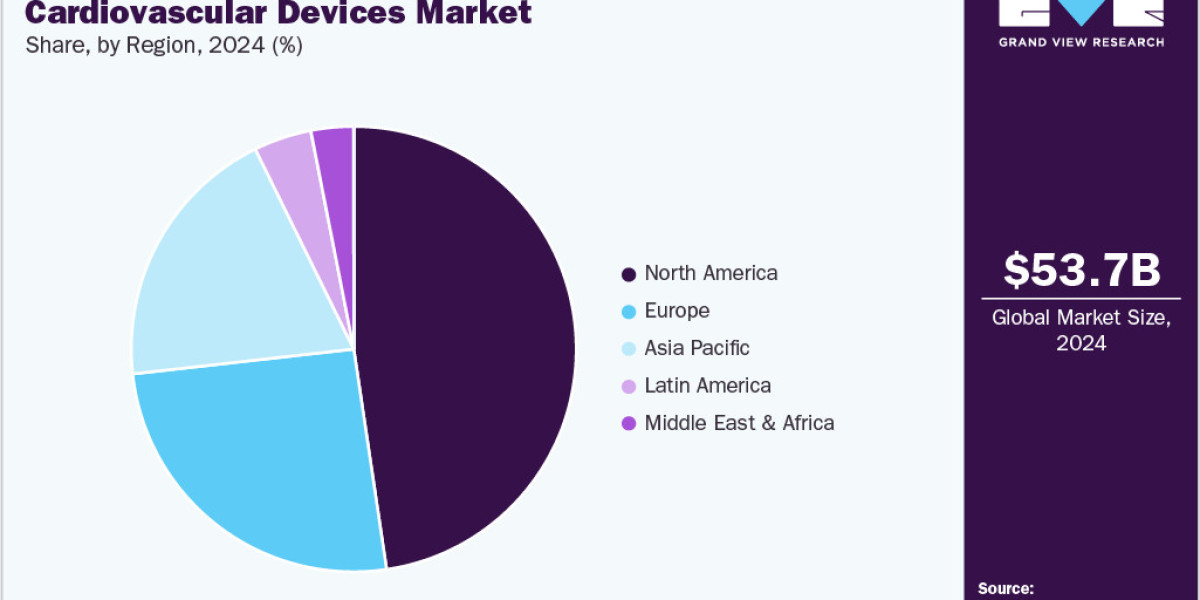

Cardiovascular disease remains one of the most prevalent medical conditions worldwide, driving a constant demand for innovation in medical devices that improve diagnosis, treatment, and patient outcomes. The global cardiovascular devices market is projected to reach USD 106.7 billion by 2033, growing at a compound annual growth rate of 7.8% from 2025 to 2033. This growth reflects a combination of rising disease prevalence, technological advancements, and a shift toward minimally invasive and digitally enabled solutions.
As healthcare providers face increasing pressure to deliver faster, safer, and more precise care, leading companies in cardiovascular devices are reshaping the landscape with state-of-the-art products and integrated solutions. Firms such as Abbott, GE HealthCare, Edwards Lifesciences Corporation, W. L. Gore & Associates, Siemens Healthcare GmbH, BIOTRONIK SE & Co. KG, Canon Medical Systems Asia Pte. Ltd., B. Braun SE, and LivaNova PLC collectively hold the largest market share and set benchmarks for quality, innovation, and clinical performance. These companies are not only developing advanced stents, pacemakers, and implantable devices but also leveraging digital platforms, AI-enabled diagnostics, and connected monitoring solutions to enhance care continuity.
Innovation Driving Market Growth
One of the most significant trends in the cardiovascular devices market is the integration of digital technology and artificial intelligence. AI-assisted diagnostics, predictive analytics, and machine learning algorithms are increasingly used to interpret complex cardiovascular data, enabling earlier detection of arrhythmias, valve dysfunction, and other heart conditions. Wearable devices and remote monitoring solutions are also gaining traction, providing real-time tracking of patient vitals and facilitating proactive clinical intervention.
Meanwhile, infrastructure expansion continues to play a pivotal role. Hospitals and cardiac centers worldwide are investing in advanced catheter labs, hybrid operating rooms, and minimally invasive surgical suites. These facilities allow healthcare professionals to perform complex procedures such as transcatheter aortic valve replacement (TAVR) or electrophysiology interventions with enhanced precision and reduced recovery times, further driving the adoption of cardiovascular devices.
Another noteworthy development is the rise of long-term monitoring solutions. Wireless ambulatory electrocardiography, implantable loop recorders, and other continuous monitoring systems are increasingly used for patients at risk of arrhythmia or post-surgical complications. By capturing comprehensive cardiac data, these devices help clinicians make informed decisions and reduce hospital readmissions.
Expanding Opportunities Across Markets
The market is also being shaped by regulatory evolution and a focus on patient-centered care. Governments are tightening standards for device safety and post-market surveillance, encouraging companies to enhance product quality and reliability. At the same time, patient demand for minimally invasive procedures, faster recovery, and home-based monitoring is pushing innovation toward portable, connected, and user-friendly cardiovascular solutions.
The global market trajectory is clear: from a landscape dominated by traditional pacemakers and stents, the industry is moving toward integrated, intelligent platforms that combine diagnostics, treatment, and follow-up care. Companies that can merge high-quality devices with digital health capabilities are well-positioned to capture growth and redefine standards of care.
Leading Companies in Cardiovascular Devices
The competitive dynamics of the cardiovascular devices market are strongly influenced by leading companies in cardiovascular devices. These industry leaders drive technological innovation and set performance standards:
- Abbott
- GE HealthCare
- Edwards Lifesciences Corporation
- W. L. Gore & Associates, Inc.
- Siemens Healthcare GmbH
- BIOTRONIK SE & Co. KG
- Canon Medical Systems Asia Pte. Ltd.
- B. Braun SE
- LivaNova PLC
These firms continue to push boundaries through the development of AI-enhanced imaging systems, minimally invasive surgical tools, implantable cardiac devices, and cloud-enabled monitoring platforms. Their research and product pipelines often dictate emerging trends in the market, influencing everything from regulatory policies to hospital procurement strategies.
Looking Ahead
As the global cardiovascular devices market approaches USD 106.7 billion by 2033, the emphasis is increasingly on solutions that not only treat disease but also enhance overall patient experience and clinical efficiency. From AI-assisted diagnostics to remote monitoring, and from hybrid surgical suites to wearable devices, the industry is moving toward holistic cardiac care that combines precision, connectivity, and data-driven insights.
Organizations that invest in innovative cardiovascular devices today will not only help address the growing burden of heart disease but also define the future of patient care. By leveraging the expertise of leading companies in cardiovascular devices, the market is poised for sustained growth, technological advancement, and improved outcomes for millions of patients worldwide.