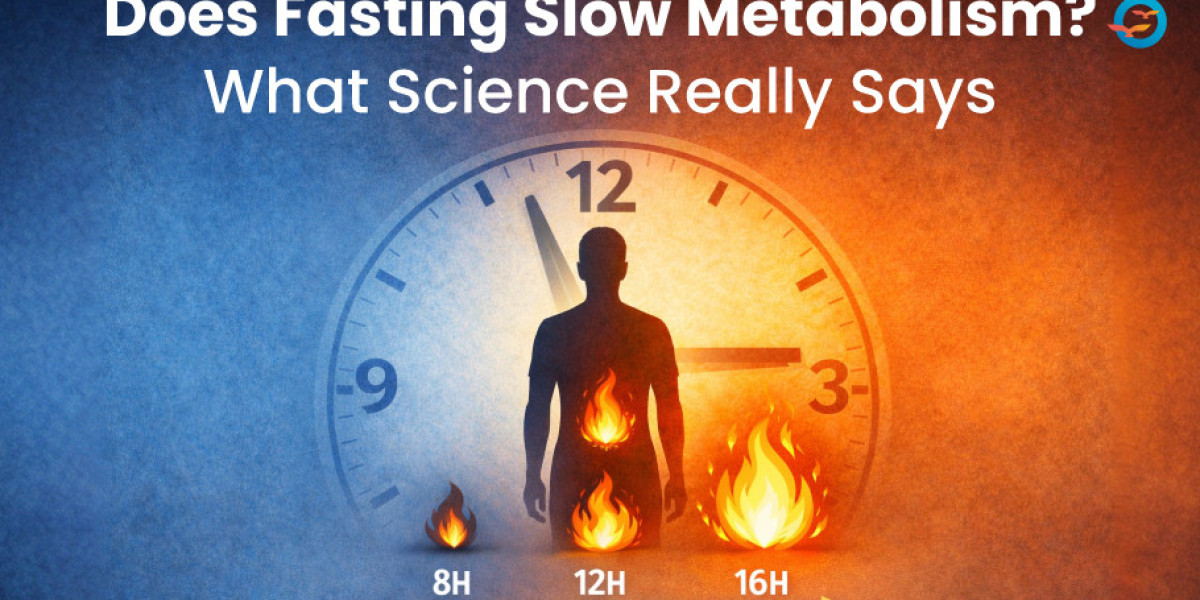

Does Fasting Slow Metabolism? What Science Really Says
One of the biggest fears people have about fasting is the idea that it slows metabolism permanently. Many avoid fasting because they believe it damages the body’s ability to burn calories and makes weight loss harder in the long run. However, scientific research shows a very different reality. Fasting does not “break” metabolism. Instead, it temporarily changes how the body produces and uses energy.
Understanding this difference is essential if I want to use fasting safely for fat loss, diabetes improvement, and overall metabolic health.
How Metabolism Responds When Fasting Begins
When I stop eating, the body does not panic or shut down. Instead, it follows a natural, well-designed survival process. In the first phase of fasting, the body uses stored carbohydrates for energy. The liver releases glycogen, which keeps blood glucose stable for roughly the first 24 to 48 hours.
During this time, carbohydrate metabolism slows down. Many people interpret this as a slowdown of metabolism itself. In reality, total energy production continues. The body is simply changing fuel sources. As insulin levels drop, fat cells begin releasing stored fatty acids. These fats are then converted into ketones, which become an alternative energy source for the brain and muscles.
This shift from sugar burning to fat burning is not metabolic damage. It is metabolic adaptation.
The Shift From Glucose to Fat Burning
A common question I hear is when the body actually starts burning fat during fasting. Fat burning does not start instantly the moment I skip a meal. It increases gradually once glycogen stores are depleted. For most people, this transition happens somewhere between 12 and 48 hours, depending on muscle mass, physical activity, stress levels, and previous diet.
This explains why short fasting windows may not immediately show visible fat loss. The body needs time to switch gears. Burning fat during fasting is a smooth metabolic transition, not an on-off switch.
Does Fasting Reduce Basal Metabolic Rate?
One concern that often comes up is whether fasting lowers basal metabolic rate, also known as BMR. Studies show that during extended fasts, BMR may decrease by around 5 to 15 percent. This temporary reduction leads many people to believe fasting is harmful.
The key detail most people miss is that this slowdown is reversible. Once regular eating resumes, metabolism rises back to baseline. The real danger appears only when fasting is prolonged, frequent, and poorly planned, especially when it causes muscle loss.
Muscle tissue plays a major role in determining metabolic rate. Losing muscle can reduce long-term calorie burning. That means the issue is not fasting itself, but fasting done without enough protein, resistance training, or recovery.
Can Fasting Improve Metabolic Efficiency?
Fasting does not dramatically increase metabolic rate, but it improves something even more important: metabolic flexibility. This refers to the body’s ability to switch smoothly between glucose and fat for energy. In people with insulin resistance or type 2 diabetes, this flexibility is often lost.
By lowering insulin levels, fasting allows stored fat to be released and used as fuel. This is why many people see fat loss during fasting even without counting calories. Hormonal balance plays a bigger role in fat burning than calorie math alone.
How Calorie Burning Works During a Fast
Many people wonder how many calories they burn while fasting. The answer depends on individual factors such as age, muscle mass, activity level, and overall health. Even while fasting, the body continues burning calories to support breathing, circulation, brain function, and organ health.
Fasting does not stop calorie burn. It simply changes the source of energy. Instead of relying on food, the body taps into stored fat when insulin levels are low. This is why fasting can support fat loss without slowing the body into “starvation mode.”
Is Metabolic Slowdown After Fasting Permanent?
The idea that fasting permanently damages metabolism is a myth. When fasting is short-term, structured, and followed by proper nutrition, any metabolic slowdown is temporary. Long-term problems occur only when fasting is extreme, poorly planned, or combined with chronic under-eating and muscle loss.
Used correctly, fasting can improve insulin sensitivity, enhance fat metabolism, and support long-term metabolic health rather than harm it.
Understanding Fasting and Insulin Regulation
One of the most powerful effects of fasting is its impact on insulin. Lower insulin levels allow fat cells to release stored energy. This process makes fasting particularly helpful for people struggling with obesity, prediabetes, and type 2 diabetes.
By giving the body regular breaks from constant eating, fasting helps restore natural hormonal rhythms that support fat burning and metabolic balance.
Final Thoughts on Fasting and Metabolism
Fasting does not slow metabolism in the way most people fear. It temporarily shifts how the body produces energy, favoring fat over sugar. Any small drop in metabolic rate during longer fasts is reversible and largely dependent on muscle preservation and proper refeeding.
When practiced correctly, fasting is a tool for metabolic improvement, not damage.
https://www.freedomfromdiabetes.org/blog/post/does-fasting-slow-down-metabolism/5109